



The traditional role of the Chief Financial Officer (CFO) is undergoing a seismic shift. No longer confined to spreadsheets and historical reporting, the modern finance function is being reimagined through the lens of Artificial Intelligence. Leading this charge is OpenCFO, an AI-native financial operations platform that recently announced it has raised $2 million in a seed funding round.
This investment, led by Endiya Partners with participation from prominent angel investors, marks a significant milestone for the startup and signals a growing investor appetite for “Autonomous Finance” solutions.
Table of Contents
The Genesis of OpenCFO: Solving the ‘Data Fragmentation’ Crisis
For most growing enterprises and mid-market companies, financial data is scattered across disparate systems: ERPs (Enterprise Resource Planning), bank accounts, payroll providers, and CRM platforms. This fragmentation leads to:
- Manual Reconciliation: Finance teams spend up to 70% of their time stitching data together rather than analyzing it.
- Delayed Decision Making: By the time a “Monthly Closing” report is ready, the data is already three weeks old.
- Human Error: Manual data entry in spreadsheets remains one of the highest risks for financial inaccuracy.
OpenCFO was founded to eliminate these bottlenecks. By building an AI-native infrastructure from the ground up, the platform doesn’t just “digitize” finance—it automates the logic behind financial operations.
Breaking Down the $2M Funding Round
The $2 million seed round is a testament to the platform’s potential to disrupt the Status Quo.
- Lead Investor: Endiya Partners, known for their deep-tech and enterprise SaaS portfolio, brings strategic weight to the table.
- The Vision: The capital infusion is earmarked for product development, specifically enhancing their proprietary AI models, and expanding their go-to-market (GTM) strategy to reach a global audience.
- Angel Participation: The inclusion of seasoned industry veterans as angel investors provides OpenCFO with a “brain trust” of mentors who have scaled fintech giants in the past.
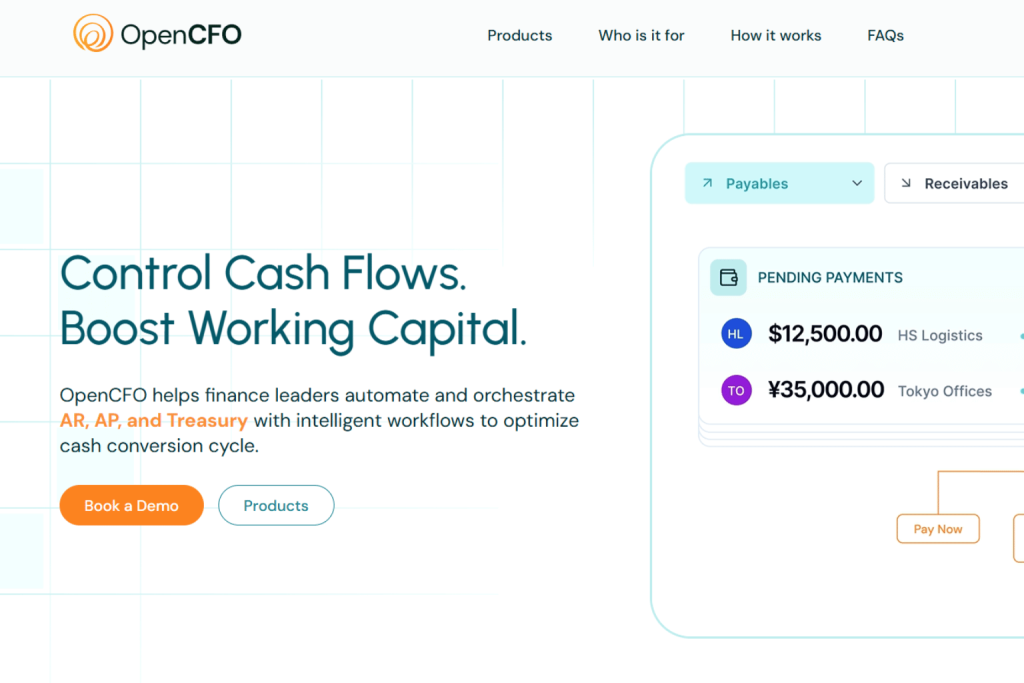
What Makes an “AI-Native” Platform Different?
Many legacy financial software companies have simply “bolted on” AI features or chatbots to their existing interfaces. OpenCFO’s “AI-native” approach is fundamentally different:
1. Real-Time General Ledger Integration
Unlike traditional software that requires batch uploads, OpenCFO syncs with existing financial stacks in real-time. This allows for a “Continuous Close” process, where the books are essentially updated every hour.
2. Predictive Cash Flow Modeling
Using machine learning, the platform analyzes historical spend patterns and market volatility to predict future cash runways. For entrepreneurs, this means knowing exactly when they might hit a liquidity crunch months before it happens.
3. Automated Accounts Payable and Receivable (AP/AR)
The platform uses Natural Language Processing (NLP) to read invoices, categorize expenses, and follow up on overdue payments without human intervention.
The Broader Impact on the Startup Ecosystem
For the readers of Entrepreneur Bulletin, this news is more than just a headline; it’s a preview of how businesses will be run in the next decade.
Empowering the “Lean Startup”
In the past, a startup needed a massive finance team to manage complex operations. With tools like OpenCFO, a founder and a part-time controller can manage the financial complexity of a multi-million dollar enterprise.
From Bookkeeping to Strategy
As AI takes over the “grunt work” of bookkeeping and tax compliance, the role of the CFO shifts toward Strategic FP&A (Financial Planning and Analysis). Finance leaders can now focus on capital allocation, M&A, and growth strategies.
The Competitive Fintech Landscape
OpenCFO enters a market where competition is heating up. While giants like SAP and Oracle NetSuite dominate the enterprise, there is a massive “missing middle”—companies that have outgrown QuickBooks but find enterprise ERPs too expensive and rigid.
OpenCFO’s edge lies in its Horizontal Integration. By acting as a thin, intelligent layer that sits on top of existing banks and tools, it provides a unified command center for all things money.
Challenges Ahead: Security and Trust in AI
While the promise of AI in finance is vast, OpenCFO faces the hurdle of “The Trust Gap.” Financial data is the most sensitive asset a company owns. To succeed long-term, the startup must:
- Maintain rigorous SOC2 Type II compliance.
- Ensure explainability in their AI models (Why did the AI categorize this expense this way?).
- Provide a seamless human-in-the-loop (HITL) interface for final approvals.
Conclusion: A New Era for Financial Intelligence
The $2M seed round led by Endiya Partners is a clear indicator that the “Spreadsheet Era” is nearing its end. As OpenCFO scales, it promises to turn the finance department from a cost center into a competitive advantage.